Short answer: medical-quality cannabis in Bangkok is sold legally only by licensed clinics and converted medical outlets, only against a PT 33 prescription, and only from GACP-certified Thai farms. Expect a 300-1,500 THB consultation, a practitioner on site and, if the practitioner decides cannabis is appropriate, a PT 33 valid for up to 30 days.
There is exactly one legal way to buy medical-grade cannabis in Bangkok in 2026: get a PT 33 prescription (ใบสั่งยา ปท. 33) from a licensed practitioner, then buy from a licensed medical outlet. Recreational sale is banned. Walk-in purchases without a prescription are banned. The dispensaries that survive are being converted into medical establishments.
This page is the Bangkok-specific view: which districts have licensed clinics, how to tell a compliant one from a leftover retail shop, what the city’s price band actually looks like, and what “medical grade” means when you are standing at the counter. For the national legal framework — how cannabis became medical-only, who qualifies, and what the penalties are — start with our pillar guide to medical cannabis in Thailand.
The Legal Basis, in One Paragraph
Since 26 June 2025, cannabis flower has been a controlled herb (สมุนไพรควบคุม) under the Protection and Promotion of Thai Traditional Medicine Knowledge Act B.E. 2542 (1999), administered by the Department of Thai Traditional and Alternative Medicine (DTAM) — not a narcotic [The Nation, June 2025]. Extracts above 0.2% THC sit in a separate Category 5 narcotics regime. Thailand still has no standalone cannabis statute: the Cannabis and Hemp Act remains unpassed as of September 2026, after a public consultation that ran from 22 April to 21 May 2026, so ministerial regulations govern in the interim. The Bangkok rules below all flow from those regulations. Full detail is in the medical cannabis in Thailand guide and the Thailand cannabis law hub.
Who Qualifies for a PT 33 in Bangkok?
Most adults with a genuine symptom qualify. The June 2025 regulation removed the old fixed list of roughly 15 qualifying conditions from the PT 33 form; each professional council now issues its own clinical guidelines. In practice, practitioners in Bangkok prescribe for chronic pain, insomnia, anxiety, nausea and appetite loss, muscle spasms, and related conditions — our guide to what conditions qualify covers the details.
Seven categories of practitioner can prescribe, all requiring DTAM cannabis-prescribing certification: medical doctors, Thai traditional-medicine practitioners, applied Thai traditional-medicine practitioners, traditional-Chinese-medicine practitioners, pharmacists, dentists, and licensed folk healers [Tilleke & Gibbins, 2026]. Dentists are limited to oral, TMJ, and maxillofacial indications. See who can prescribe cannabis in Thailand for the breakdown.
You do not need to be Thai. If you are a tourist or expat, a passport is enough identification for the consultation.
Step by Step: Getting Medical Cannabis in Bangkok
The process usually fits inside an hour. Here is how it works:
- Choose a licensed clinic. Bangkok has licensed cannabis clinics across Sukhumvit, Silom, and most central districts. Use our directory of licensed medical clinics and look for the license-status identification sticker Thai authorities now issue to lawful outlets [The Nation, 2026].
- Bring your passport or Thai ID. No prior medical records are required, though bring them if you have any, along with a list of current medications, since cannabis interacts with blood thinners and some antidepressants.
- Sit the consultation. A licensed practitioner assesses your symptoms, typically in 10-20 minutes. Many central-Bangkok clinics have English-speaking staff.
- Receive the PT 33. If approved, you get the paper form specifying strain, dosage, and duration. It is valid for up to 30 days from issue, with a commonly reported cap of around 30 grams per month. Our PT 33 prescription guide walks through the form itself.
- Buy your prescribed product. Purchase at the clinic or another licensed outlet, up to the prescribed amount and never more than 30 days’ supply.
Consume it privately. Smoking in public is a separate offence — more on that below.
Where Licensed Clinics Are in Bangkok
Licensed medical outlets are not spread evenly across the city. Five clusters account for most of them:
- Sukhumvit (Nana, Asok, Phrom Phong) — the densest concentration, and the most likely to have English-speaking practitioners and posted pricing.
- Silom and Sathorn — clinic-style venues serving the business district; quieter, more appointment-driven.
- Ratchathewi and Victory Monument — closer to the local market, often lower consultation fees, more Thai-only service.
- Thonglor and Ekkamai — wellness-positioned clinics, generally the top of the price band.
- Khao San and Rambuttri — walk-in oriented and used to foreign visitors, but also where leftover retail-style operators are most likely to be found. Check the licence sticker carefully here.
Government hospitals across Bangkok also run cannabis or Thai traditional medicine clinics that can issue a PT 33, usually at the lowest cost, at the price of appointment queues and Thai-language service. Search by area in our directory of licensed medical clinics.
Whichever district you pick, the prescription is national: a PT 33 issued in Bangkok is valid at any licensed outlet anywhere in Thailand for its 30-day life.
Bangkok Clinics in Our Directory
A few Bangkok listings to start from, by area. These come from public business listings; we have not verified any outlet’s current licence, so check the sticker and ask about the practitioner when you arrive.
- Silom (Bang Rak): Bangkok Integrative Medicine (BIM Poly Clinic)
- Old town (Pom Prap): Thai Traditional and Integrated Medicine Hospital, a public hospital option
- Khao San (Phra Nakhon): Greenhead Clinic
- North Bangkok (Bang Khen, Sai Mai): Bangkok Sawasdee Clinic and Thanya Sutra, a Thai traditional medicine clinic
The full city picture, clinics and dispensaries together, is on our Bangkok cannabis page, and the dispensary finder lets you search by district.
What a Licensed Clinic Actually Does
The clinic is not a formality; it is the entire legal channel. In April 2026, the Ministry of Public Health announced that the roughly 11,000 remaining licensed cannabis shops will be converted into regulated medical establishments — clinics, pharmacies, or traditional-medicine pharmacies — over a 3-year transition aligned with license-expiry cycles [Khaosod English, April 2026].
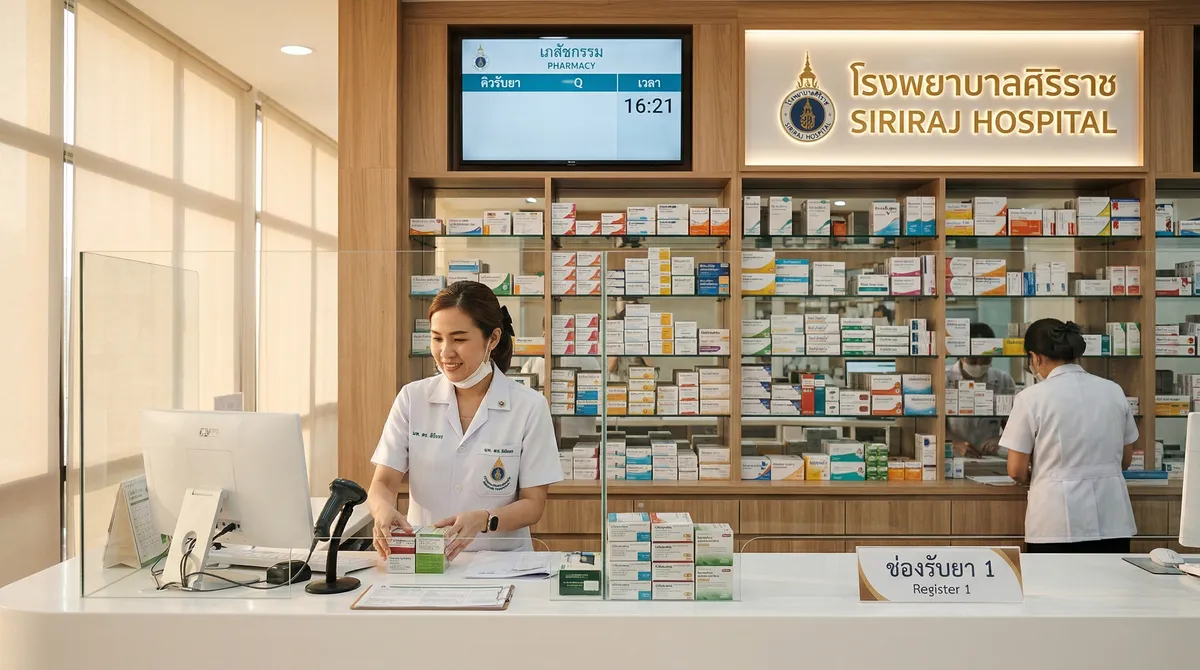
A compliant Bangkok outlet must have a DTAM-trained practitioner physically present throughout all operating hours (Ministerial Regulation No. 2 B.E. 2569, Article 8/1(4)), sell only against a prescription capped at 30 days’ supply, run no advertising, and stock flower sourced exclusively from GACP-certified farms [Juslaws, 2026]. Behind the counter, that means climate-controlled segregated storage and monthly inventory reporting to DTAM.
The squeeze is real. Of 8,636 licenses that expired in 2025, only 1,339 — about 15.5% — were renewed, and 7,297 of 18,433 shops nationwide had closed by February 2026. Officials project only around 3,000 outlets will complete the medical transition [The Nation, 2026]. If a Bangkok shop is still operating and selling against prescriptions, it has cleared a genuinely demanding bar.
Medical Quality and “Premium”: What They Mean in Bangkok
Searches for medical-quality or medical-grade cannabis in Bangkok now have a specific regulatory answer. Flower moving through the legal channel must come from farms certified under GACP — Good Agricultural and Collection Practices — which covers cultivation hygiene, contaminant control, and traceability. Combined with the storage, practitioner, and reporting rules above, the legal supply chain is now the quality standard. Anything sold outside it carries no such assurance, and buying it is not legal in the first place.
“Premium” is a different word doing different work. In the legal channel it is a commercial claim, not a regulatory grade, so it is worth pressing on: which GACP farm did this come from, is there a certificate of analysis, how has it been stored, and does it match what the practitioner actually prescribed? Clinics in Thonglor and upper Sukhumvit charge premium prices; whether the flower behind that price is materially better is a question the paperwork can answer and the shopfront cannot.
Medical Cannabis Products Available in Bangkok
What you can buy is set by your prescription, not by the display case. Bangkok clinics typically carry:
- Dried flower — the most commonly requested format, dispensed against the prescribed quantity.
- Cannabis oils — including standardised GPO formulations at government hospitals, and full-spectrum or CBD-dominant private-brand oils.
- Capsules and tinctures — pre-dosed formats favoured for consistent daily dosing.
- Topical balms — for localised pain; commonly available without the dosing constraints of inhaled products.
- Traditional Thai preparations — cannabis compounded with Thai herbs, dispensed by Thai traditional medicine practitioners. See cannabis in traditional Thai medicine.
CBD products at or below 0.2% THC sit outside this channel entirely and are sold in Bangkok pharmacies and wellness shops without any prescription.
Are You Looking for a Supplier Rather Than a Clinic?
If “medical cannabis supplier” means you are a clinic or licensed outlet sourcing stock, the rules are different: flower must come from GACP-certified farms and move through licensed channels with DTAM reporting. Our guide to medical cannabis suppliers in Thailand covers the B2B side.
What Medical Cannabis Costs in Bangkok
A consultation at a Bangkok clinic typically runs 300-1,500 THB (roughly 8-42 USD), and some clinics fold the fee into a purchase. The PT 33 itself is normally issued at no separate charge during the visit. Product pricing varies by strain, format, and clinic.
A caution on published fee figures: Thailand’s cannabis license-fee and validity schedules are currently disputed — widely cited figures conflict with the statutory Herbal Products Act schedule — so treat any THB licensing number you read online, including on older pages of this site, as unverified until confirmed against the Royal Gazette. Consultation prices above are current market observations, not statutory fees.
What Is NOT Legal
The bright lines, as of September 2026:
- Buying without a prescription. There is no legal walk-in purchase. A shop that sells flower without a PT 33 commits an offence under the Traditional Medicine Act B.E. 2542 carrying up to 1 year imprisonment and/or a 20,000 THB fine [Legal500, 2025].
- Recreational sale and advertising. Banned outright since 26 June 2025. Converted medical outlets may not advertise at all.
- Smoking in public. A separate offence under the Public Health Act B.E. 2535 (1992) — creating a public nuisance through cannabis smoke carries fines up to 25,000 THB and/or up to 3 months imprisonment. This is a different penalty under a different law than the sale offence; do not confuse the two figures.
- Taking cannabis across borders. Export without permits is illegal, including in your luggage on the way home.
CBD is the one carve-out: products at or below 0.2% THC are legal without a prescription, subject to Thai FDA registration and labeling rules for their product category.
If You Are a Tourist in Bangkok
If you are visiting, the system is open to you. Tourists can get a PT 33 at a licensed Bangkok clinic with nothing more than a passport, and the process is identical to the one above. If you are a resident expat, the same applies with your passport or Thai ID.
Two rules matter most for visitors: consume privately, and never take cannabis on an international flight, because export is a criminal offence. Domestic flights are allowed with a valid PT 33 and your receipt; see travelling with cannabis on Thai domestic flights. Our guide for tourists buying cannabis in Thailand covers airports, hotels, and the practical details.
The era of the Bangkok weed dispensary is over. What replaced it is narrower but stable: a prescription, a licensed clinic, and a regulated product. Follow that channel and you are fully inside the law.
Next: the PT 33 prescription guide for the form and the consultation, and the pillar guide to medical cannabis in Thailand for the national picture — costs, conditions, government hospital access, and how the law got here.
Sources
Frequently Asked Questions
Where can I buy medical-grade cannabis in Bangkok?
Can I buy medical-grade cannabis in Bangkok without a prescription?
What counts as premium medical cannabis in Bangkok?
Are there still weed dispensaries in Bangkok?
How much does medical cannabis cost in Bangkok?
Can tourists get medical cannabis in Bangkok?
What does medical-grade cannabis mean in Thailand?
How much cannabis can I buy with a PT 33?
Cannabis for Thailand
Cannabis for Thailand