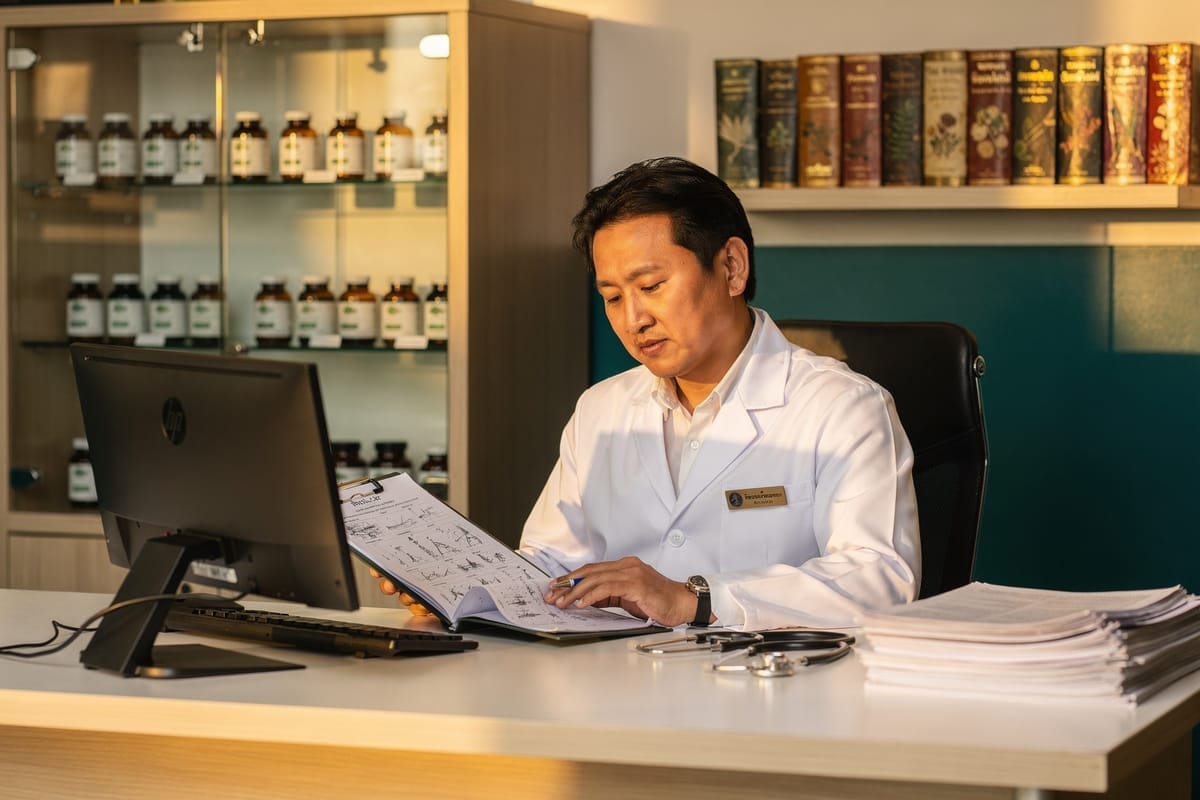
Since June 2025, a PT 33 prescription (ใบสั่งยา ปท. 33) is required to legally purchase cannabis flower in Thailand. The prescription is issued by licensed practitioners who assess whether medical cannabis is appropriate for the patient’s condition.
Thailand’s approach to qualifying conditions is relatively flexible compared to many countries. Rather than maintaining a strict list of approved conditions, the system allows licensed practitioners — including Traditional Thai Medicine (TTM) practitioners — to use their professional judgment in determining whether cannabis may benefit a patient.
This guide covers the conditions most commonly approved for PT 33 prescriptions and what to expect during the consultation process.
Commonly Approved Conditions
Chronic Pain
Chronic pain is the most frequently cited reason for PT 33 prescriptions in Thailand. This includes:
- Back pain and spinal conditions
- Arthritis and joint pain
- Neuropathic pain (nerve-related)
- Fibromyalgia
- Cancer-related pain
- Post-surgical chronic pain
- Musculoskeletal pain
Cannabis products prescribed for pain typically include both THC and CBD formulations, with the specific ratio determined by the practitioner based on the patient’s symptoms and pain level.
Read our complete guide: Cannabis for Chronic Pain
Insomnia and Sleep Disorders
Sleep-related conditions are the second most common reason for PT 33 prescriptions. Thailand has a strong tradition of using cannabis as a sleep aid, with historical precedents in Traditional Thai Medicine.
Products prescribed for insomnia tend to be indica-dominant strains or oils with higher THC content, typically taken in the evening. Some practitioners recommend CBD-dominant products for mild sleep disturbances.
Read our complete guide: Cannabis for Insomnia
Anxiety and Stress-Related Conditions
Anxiety disorders qualify for PT 33 prescriptions, including:
- Generalized anxiety disorder
- Social anxiety
- Stress-related conditions
- Panic disorders
Practitioners typically start with lower-THC or CBD-dominant products for anxiety, as high-THC cannabis can sometimes worsen anxiety symptoms.
Read our complete guide: Cannabis for Anxiety and PTSD
Nausea and Appetite Loss
Cannabis has a well-documented history of treating nausea and stimulating appetite. Qualifying conditions include:
- Chemotherapy-induced nausea
- HIV/AIDS-related appetite loss
- Chronic nausea of various causes
- Eating disorders (appetite stimulation)
Read our complete guide: Cannabis for Nausea and Cancer Support
Neurological Conditions
Several neurological conditions qualify for PT 33 prescriptions:
- Epilepsy and seizure disorders (particularly treatment-resistant forms)
- Parkinson’s disease (for symptom management)
- Multiple sclerosis-related spasticity
- Migraine headaches
Thailand’s FDA has recognized CBD-based treatments for certain forms of epilepsy, and some hospitals maintain CBD treatment programs for pediatric epilepsy patients.
Read our complete guides: Cannabis for Epilepsy | Cannabis for MS and Spasticity
PTSD and Trauma-Related Conditions
Post-traumatic stress disorder and related conditions are recognized as qualifying for medical cannabis, particularly for:
- Sleep disturbances associated with PTSD
- Anxiety symptoms
- Hyperarousal
- Nightmares
Muscle Spasms and Spasticity
Conditions involving muscle spasms or spasticity qualify, including:
- Multiple sclerosis-related spasticity
- Spinal cord injury-related spasms
- Chronic muscle tension
- Dystonia
Read our complete guide: Cannabis for MS and Spasticity
Palliative Care
Cannabis is recognized as an appropriate treatment option in palliative care settings for:
- Pain management
- Appetite stimulation
- Nausea control
- Anxiety reduction
- Improving quality of life
The Traditional Thai Medicine Approach
Thailand’s cannabis framework is unique in that it incorporates Traditional Thai Medicine (TTM) practitioners alongside Western-trained physicians. TTM practitioners may assess conditions through their traditional diagnostic framework, which considers the body’s element balance (ธาตุ) and energy pathways.
Under the TTM approach, practitioners may prescribe cannabis for conditions that fall within their traditional scope of practice, including various pain conditions, digestive issues, sleep problems, and musculoskeletal complaints.
One historical reference point is ยาศุขไสยาศน์ (Ya Sukhasaiyat), a cannabis-containing sleep formula recorded in ตำราพระโอสถพระนารายณ์ (King Narai’s Medicine text) and one of the 16 traditional cannabis formulas officially recognized by DTAM today.
The Consultation Process
What to Expect
- Registration — Provide your passport (tourists) or Thai ID card (residents) and complete a patient information form
- Medical History — The practitioner will ask about your symptoms, their duration, and any current medications
- Assessment — The practitioner evaluates whether medical cannabis is appropriate for your condition
- Prescription — If approved, you receive a PT 33 form authorizing cannabis purchase
- Product Guidance — The practitioner recommends specific products or strains based on your condition
What to Bring
- Passport or Thai ID card
- Existing medical records (if available, but not required)
- Current medication list — important for checking drug interactions
- Description of your symptoms — when they started, severity, what you’ve tried
Consultation Duration
Typical consultations take 10-20 minutes. More complex cases may take longer if the practitioner needs to review medical history in detail.
Cost
Consultation fees range from 300-1,500 THB depending on the clinic. Some clinics include the consultation fee in the cost of cannabis products if you make a purchase.
Products Available
After receiving a PT 33 prescription, patients can access:
- Cannabis flower — Various strains (sativa, indica, hybrid) in different THC/CBD ratios
- Cannabis oil — Sublingual oils in measured doses
- Cannabis capsules — Pre-dosed capsules for consistent dosing
- Topicals — Creams and balms for localized pain
- Government formulations — Including the Thai government’s standardized cannabis oil preparations
Important Considerations
- Drug interactions — Cannabis can interact with blood thinners, antidepressants, and other medications. Disclose all current medications to your practitioner
- Driving — It is illegal to drive under the influence of cannabis in Thailand
- Dosage — Start with a low dose and increase gradually as recommended by your practitioner
- Not a cure — Medical cannabis manages symptoms but does not cure underlying conditions
- Follow-up — Some practitioners recommend follow-up appointments to adjust products or dosing
Ready to get your PT 33? Find a licensed cannabis clinic near you, or read about the current cannabis laws in Thailand to understand the full legal framework.
More on medical cannabis in Thailand: start with the pillar guide to medical cannabis in Thailand for the legal status, costs and access routes, and the PT 33 prescription guide for the form itself.
Frequently Asked Questions
What conditions qualify for medical cannabis in Thailand?
Can I get a PT 33 prescription for anxiety?
Do I need a previous diagnosis to get a PT 33?
Can tourists get a PT 33 for medical conditions?
Cannabis for Thailand
Cannabis for Thailand