
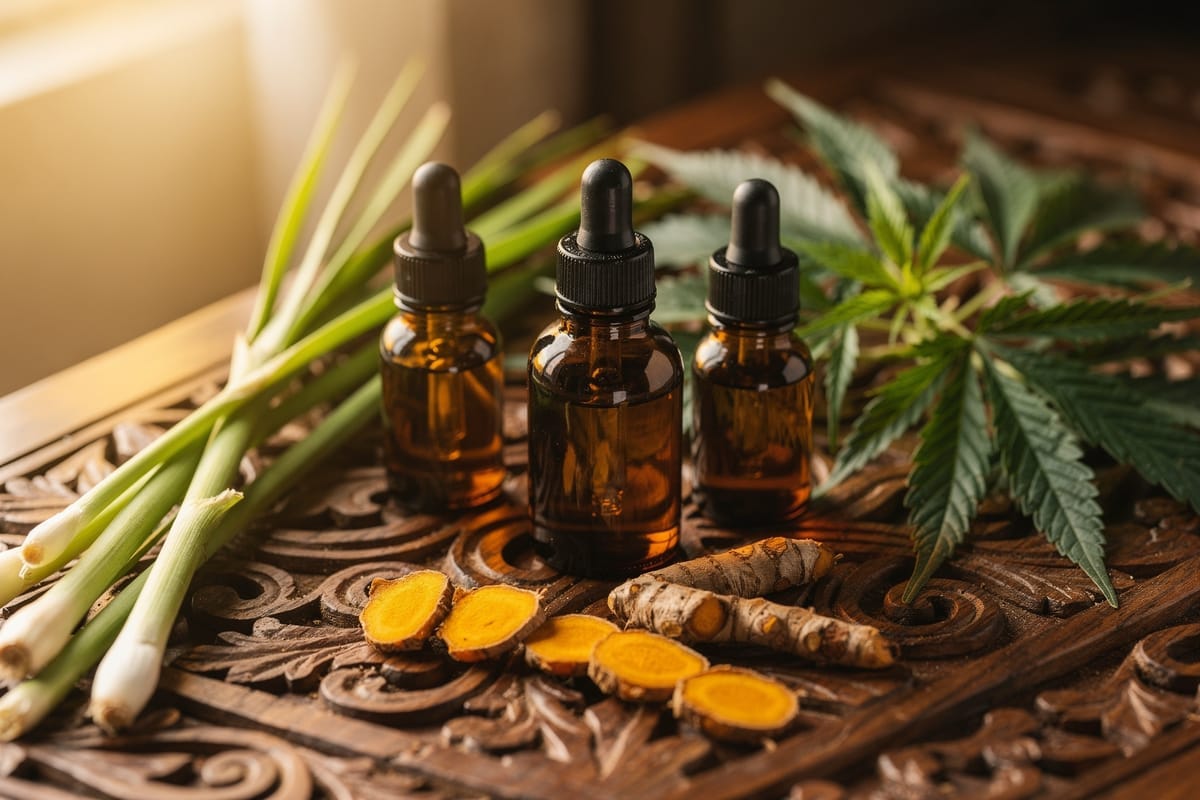
CBD oil has become one of the most popular wellness products in Thailand. Since cannabis decriminalization in 2022 and subsequent regulation changes, the Thai CBD market has matured considerably — but it has also become more complex to navigate. Not all products are created equal, and knowing how to identify quality CBD oil can save you money and ensure you actually get the benefits you are looking for.
This guide covers everything you need to know about evaluating, buying, and using CBD oil in Thailand. For more, see our CBD oil overview and our CBD dosage guide. We do not recommend specific brands — instead, we give you the tools to make informed decisions on your own.
Understanding CBD Oil Basics
What Is CBD Oil?
CBD (cannabidiol) is a non-intoxicating compound found in the cannabis plant. Unlike THC (tetrahydrocannabinol), CBD does not produce a “high.” CBD oil is made by extracting CBD from hemp or cannabis plants and diluting it with a carrier oil such as MCT (coconut) oil, hemp seed oil, or olive oil.
In Thailand, CBD products containing less than 0.2% THC are legal without a prescription. This means you can buy CBD oil freely at pharmacies, wellness shops, and online retailers — no PT 33 prescription required.
Full-Spectrum vs. Broad-Spectrum vs. Isolate
Understanding these three types is essential before purchasing:
Full-Spectrum CBD Oil contains all naturally occurring compounds from the cannabis plant, including trace amounts of THC (below 0.2% to be legal in Thailand), other cannabinoids (CBG, CBN, CBC), terpenes, and flavonoids. Many researchers believe these compounds work together in what is sometimes called the “entourage effect,” potentially enhancing the overall benefits. Full-spectrum products tend to have a more earthy, natural flavor.
Broad-Spectrum CBD Oil contains the same range of cannabinoids and terpenes as full-spectrum, but with THC removed or reduced to undetectable levels. This may be a good option for those who want to avoid THC entirely — for example, if you are subject to workplace drug testing or simply prefer a THC-free product.
CBD Isolate is pure CBD with no other cannabinoids or plant compounds. It is typically 99%+ pure CBD and has little to no taste or smell. Isolate products are the most affordable option and may be suitable for those who want precise dosing of CBD alone. However, they miss out on the potential benefits of other plant compounds.
Which type should you choose? There is no single “best” type. Full-spectrum is often considered the most effective due to the entourage effect, but broad-spectrum and isolate products have their place. If you are new to CBD, any of the three can be a reasonable starting point.
How to Evaluate CBD Oil Quality
Quality varies enormously in the Thai CBD market. Here are the key factors to assess before making a purchase.
1. Check for Thai FDA Registration
The Thai Food and Drug Administration (FDA) oversees CBD products sold in Thailand. Legitimate CBD products should have an FDA registration number printed on the packaging. This number indicates the product has been reviewed and approved for sale in Thailand.
How to verify: Look for a registration number on the label, often preceded by “อย.” (the Thai abbreviation for the FDA). You can verify this number on the Thai FDA website or contact them directly. Products without an FDA number may not have undergone any quality or safety review.
2. Read the Label Carefully
A quality CBD oil label should include:
- CBD content per bottle (in milligrams) — e.g., 500mg, 1,000mg, 2,000mg
- CBD content per serving/drop (in milligrams) — so you know exactly how much you are taking
- THC content — should state less than 0.2% for legal compliance
- Type of CBD — full-spectrum, broad-spectrum, or isolate
- Carrier oil — MCT oil, hemp seed oil, etc.
- Ingredients list — should be short and recognizable
- Batch or lot number — essential for traceability
- Expiry date — CBD oil does degrade over time
- Manufacturer name and address
If a product is missing several of these elements, consider it a warning sign.
3. Demand a Certificate of Analysis (COA)
A Certificate of Analysis is a lab report from an independent, third-party laboratory that verifies the contents of the product. This is arguably the single most important quality indicator for CBD oil.
What a COA should include:
- Cannabinoid profile — confirms the actual CBD and THC content matches what is on the label
- Heavy metals testing — checks for lead, mercury, arsenic, and cadmium
- Pesticide screening — ensures no harmful pesticide residues
- Microbial testing — checks for mold, bacteria, and other contaminants
- Residual solvents — confirms no harmful chemicals from the extraction process remain
How to access COAs: Reputable brands either print a QR code on the packaging that links to the lab report, list COAs on their website, or provide them upon request. If a company cannot or will not provide a COA, that is a major red flag.
How to read a COA: Look for the “pass/fail” indicators on contaminant tests. For potency, compare the listed CBD content on the label with the lab-tested amount. A variance of 10-15% is common and generally acceptable in the industry. If the actual CBD content is dramatically lower than advertised, the product may be mislabeled or diluted.
Thailand’s Bureau of Drug and Narcotic operates a Cannabis Laboratory center that conducts testing for cannabis and CBD products. The Department of Medical Science also mandates testing for CBD and THC in cannabis products according to product-group regulations.
4. Extraction Method Matters
The method used to extract CBD from the plant affects the final product quality:
- CO2 extraction is considered the gold standard. It produces clean, potent extracts without harmful solvents. Products made with CO2 extraction tend to cost more but are generally higher quality.
- Ethanol extraction is also widely used and produces good-quality extracts. It is more cost-effective than CO2 extraction.
- Solvent-based extraction (using butane, propane, or hexane) is cheaper but carries a risk of residual solvents in the final product. Avoid products that do not specify their extraction method, as they may use lower-quality processes.
5. Source of Hemp/Cannabis
Where the raw plant material comes from matters. Look for:
- Organically grown hemp or cannabis, free from pesticides and herbicides
- Thai-grown hemp — Thailand has a growing domestic hemp industry, and locally sourced products reduce the risk of import-related quality issues
- Imported from reputable sources — if not Thai-grown, look for hemp sourced from countries with established hemp industries and strict agricultural regulations
Understanding CBD Concentrations and Labeling
One of the most confusing aspects of buying CBD oil is understanding the concentration listed on the bottle.
Milligrams Per Bottle vs. Per Serving
A bottle labeled “1,000mg CBD” contains 1,000 milligrams of CBD in the entire bottle. If the bottle is 30ml and contains approximately 600 drops, each drop contains roughly 1.67mg of CBD. If the recommended serving is one dropper (about 1ml or 20 drops), that serving contains approximately 33mg of CBD.
Always check the per-serving amount, not just the total. Two bottles may both say “1,000mg” but have different volumes, meaning very different per-serving doses.
Percentage Labeling
Some products, particularly those from European-style brands, list concentration as a percentage:
- 5% CBD oil — contains 500mg of CBD per 10ml bottle
- 10% CBD oil — contains 1,000mg of CBD per 10ml bottle
- 20% CBD oil — contains 2,000mg of CBD per 10ml bottle
This system can be easier to understand for dosing purposes.
Common Concentrations in Thailand
CBD oil products in Thailand typically come in these ranges:
- Low concentration (250-500mg): Good for beginners, general wellness, and mild conditions. These are typically the most affordable.
- Medium concentration (500-1,000mg): Suitable for regular users or moderate symptoms. Offers a balance of value and potency.
- High concentration (1,000-2,000mg): For experienced users or more significant symptoms. Higher per-milligram value but higher upfront cost.
- Very high concentration (2,000mg+): Specialized products, typically used under medical guidance.
Price Ranges in Thailand
CBD oil pricing in Thailand varies based on concentration, type, brand, and volume. Here is a general guide to what you can expect:
Budget Tier (500-1,000 THB)
- Typically CBD isolate products
- Lower concentrations (250-500mg per bottle)
- May use lower-cost extraction methods
- Less likely to have comprehensive third-party testing
- Can be perfectly fine for casual use, but scrutinize labels carefully
Mid-Range (1,000-2,000 THB)
- Often broad-spectrum or full-spectrum
- Medium concentrations (500-1,000mg per bottle)
- More likely to have third-party lab testing
- Better extraction methods
- This is where most consumers find good value
Premium Tier (2,000-3,500 THB)
- Full-spectrum with comprehensive lab testing
- Higher concentrations (1,000-2,000mg per bottle)
- CO2 extraction
- Organic ingredients
- Detailed COAs available
Government Hospital CBD (100-500 THB)
Government hospitals and some public health facilities offer CBD products at subsidized prices through the Government Pharmaceutical Organization (GPO). These are among the most affordable options and have the backing of government quality control. However, product selection may be limited.
Cost Per Milligram
A useful way to compare value across products is to calculate the cost per milligram of CBD. Divide the total price by the total milligrams of CBD in the bottle. In Thailand, you can generally expect to pay between 1-5 THB per milligram of CBD, depending on the product tier.
Where to Buy CBD Oil in Thailand
Pharmacies
Many pharmacies across Thailand stock CBD oil. Pharmacists can provide guidance on selection and dosing. Pharmacy-sold products are more likely to have proper FDA registration. This is often the safest option for first-time buyers.
Wellness and Health Food Shops
Specialty health stores, particularly in Bangkok and tourist areas, carry a wide selection of CBD products. Staff are often knowledgeable about different products and can help match you with the right option. These shops may carry imported products not available at pharmacies.
CBD Specialty Stores
Dedicated CBD shops have become common in major Thai cities, particularly in Bangkok, Chiang Mai, and Phuket. These stores typically offer the widest selection and the most knowledgeable staff. Many allow you to view COAs in-store.
Online Retailers
Several established online platforms deliver CBD products throughout Thailand. Online shopping allows you to compare products, read reviews, and verify COAs before purchasing. Look for retailers that provide detailed product information, clear return policies, and responsive customer service. Many online retailers offer free shipping within Thailand.
Government Hospitals
Public hospitals that operate cannabis clinics often have CBD products available through their hospital pharmacies. These products are produced or approved by the Government Pharmaceutical Organization and are typically sold at subsidized prices. This is the most budget-friendly option, though you may need to visit in person.
Convenience Stores
Some convenience stores carry low-concentration CBD products such as drinks, balms, or basic tinctures. While convenient, the selection is limited, and staff are unlikely to be knowledgeable about CBD. These products are generally entry-level.
Government Pharmaceutical Organization (GPO) Products
The Government Pharmaceutical Organization produces its own line of cannabis and CBD products. These products are noteworthy because:
- They are manufactured under strict pharmaceutical standards
- Quality control is handled by a government entity
- Pricing is typically lower than private-sector equivalents
- They are available through government hospitals and selected pharmacies
- Formulations are developed based on research conducted within the Thai medical system
GPO products may include CBD oils, sublingual sprays, and topical preparations. Availability varies by hospital and region, so it is worth calling ahead if you specifically want GPO products.
Red Flags and Counterfeit Products
The popularity of CBD has inevitably attracted low-quality and counterfeit products. Watch out for these warning signs:
Product Red Flags
- No FDA registration number on the packaging
- No batch or lot number — makes quality tracking impossible
- Health claims on the label — legitimate CBD products in Thailand should not claim to cure, treat, or prevent specific diseases
- Unrealistically low prices — if a 1,000mg CBD oil costs 200 THB, it almost certainly is not what it claims to be
- No ingredients list — you have a right to know what is in the product
- No expiry date — CBD oil degrades over time; an expiry date shows quality awareness
Seller Red Flags
- Cannot provide a COA when asked
- Aggressive health claims — sellers who promise CBD will “cure” conditions are not being honest
- Pressure to buy immediately — quality products sell on their merits
- No physical address or contact information — legitimate businesses can be reached
- Selling via unregulated social media channels only — while some legitimate sellers use social media, products sold exclusively through informal channels carry higher risk
Common Scams
- Hemp seed oil sold as CBD oil — hemp seed oil is nutritious but contains little to no CBD. Check the ingredients list carefully.
- Diluted products — the label says 1,000mg but the actual CBD content is far lower. This is why COAs are essential.
- Synthetic CBD — rare but possible; lab-created CBD analogs that may not have the same safety profile as plant-derived CBD.
Tips for Tourists Buying CBD in Thailand
If you are visiting Thailand and want to purchase CBD oil, here are some practical considerations:
Before You Buy
- Check your home country’s laws — CBD legality varies significantly. Some countries prohibit any cannabis-derived products, even CBD with 0% THC. Bringing CBD oil home could result in legal trouble at customs.
- Stick to reputable outlets — pharmacies and established specialty stores are safer bets than market stalls or street vendors.
- Ask to see the COA — a reputable seller will not hesitate to show you lab results.
- Start with a small bottle — if you are trying CBD for the first time, buy a small, lower-concentration product rather than investing in a large, expensive bottle.
Practical Tips
- Keep the receipt — useful if you need to show proof of legal purchase.
- Keep original packaging — the FDA registration number and labeling are your proof that the product is legal.
- Consider travel-friendly formats — small bottles, capsules, or balms may be easier to travel with than large glass bottles.
- Airport and border considerations — while CBD is legal in Thailand, you may face questions when departing. Having original packaging with clear labeling showing THC content below 0.2% can help. However, many countries do not permit CBD imports regardless of THC content.
Language Considerations
- CBD oil in Thai is “น้ำมัน CBD” (nam man CBD) or “น้ำมันซีบีดี”
- Most CBD shops in tourist areas have English-speaking staff
- Product labels on major brands are often bilingual (Thai and English)
- If shopping at a pharmacy, the pharmacist can typically communicate in English
How to Store CBD Oil
Proper storage extends the shelf life and maintains potency:
- Keep it cool — store in a cool, dark place away from direct sunlight. Thailand’s tropical climate means room temperature can be quite warm; consider refrigerating your CBD oil.
- Seal tightly — air exposure degrades CBD over time.
- Avoid humidity — moisture can encourage mold growth.
- Use within the expiry date — most CBD oils have a shelf life of 12-24 months when stored properly.
Final Thoughts
The Thai CBD market offers a wide range of products at varying quality levels. By understanding what to look for — FDA registration, COAs, clear labeling, and reputable sellers — you can confidently find a quality product that meets your needs and budget.
Remember that CBD affects everyone differently, and what works for one person may not work the same way for another. If you are considering CBD for a specific health concern, consulting with a healthcare provider is always advisable.
Disclaimer: This guide is for informational purposes only and does not constitute medical advice. CBD products are wellness supplements, not medicines, unless specifically prescribed. Always consult with a qualified healthcare professional before starting any new supplement regimen, especially if you are taking medications or have existing health conditions.
Frequently Asked Questions
How much does CBD oil cost in Thailand?
Where can I buy CBD oil in Thailand?
How do I know if CBD oil is real in Thailand?
What strength CBD oil should I buy?
Cannabis for Thailand Editorial Team
Cannabis for Thailand