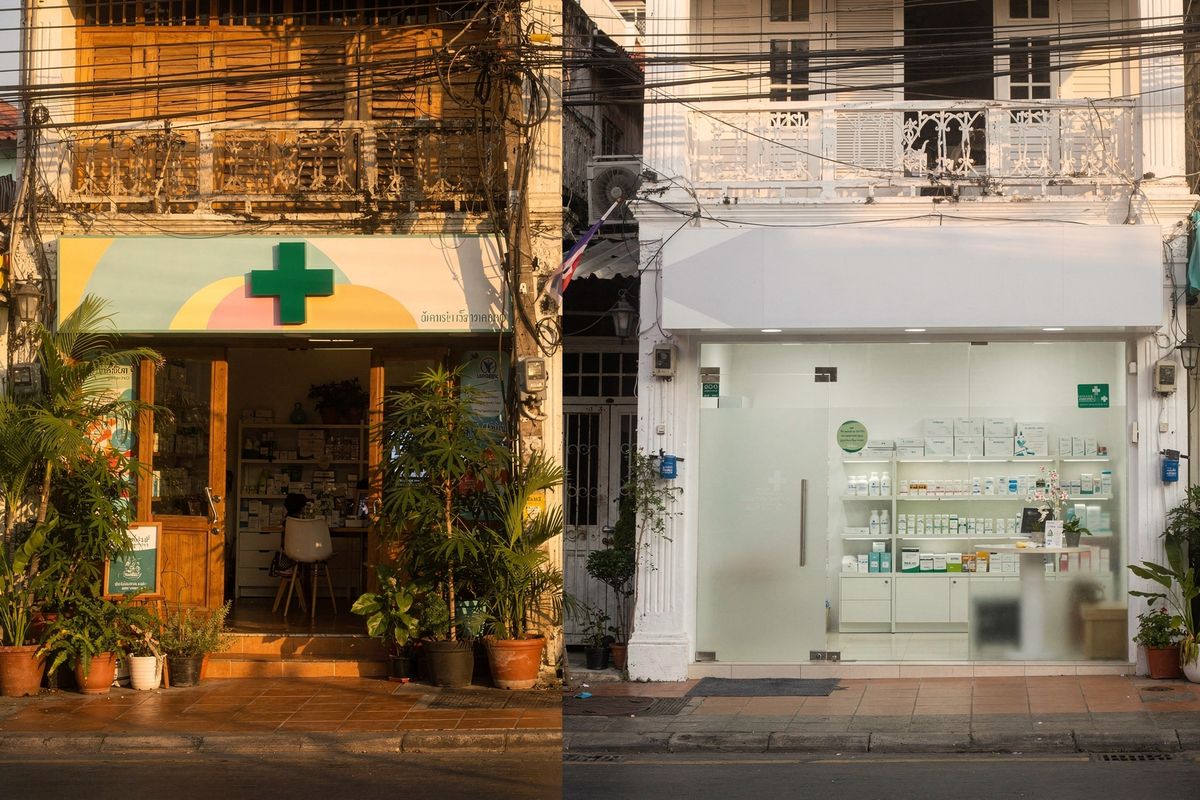
Thailand’s remaining cannabis shops must convert into licensed medical establishments — clinics, pharmacies, herbal-product retailers, or traditional-medicine practices — or close when their current licenses expire. The renewal numbers show how hard that gate bites: of the 8,636 licenses that expired in 2025, only 1,339 (about 15%) were renewed. Of the 18,433 shops that once operated across the country, thousands have already gone dark.
Public Health Minister Pattana Promphat confirmed the policy in early April 2026: operators renewing their licenses must upgrade into regulated medical facilities. The casual dispensary model that defined Thailand’s cannabis boom from 2022 to 2024 is officially over.
Update — May 2026: What was announced on April 1 was formalized on April 30, 2026, when Ministerial Regulation (No. 2) B.E. 2569 was published in the Royal Gazette. The regulation locks in four cumulative criteria for every cannabis-flower sell/process/export licence — premises ownership, dedicated storage, a qualifying health-sector credential, and DTAM-trained staff on duty — plus an odor and smoke elimination system. Renewal is now a substantive re-qualification, not a paperwork refresh. See our full compliance guide to Ministerial Regulation No. 2 B.E. 2569 for the operator-facing breakdown.
The Numbers Tell the Story
When 8,636 cannabis shop licences expired in 2025, only 1,339 operators — about 15% — filed for renewal. The remaining 7,297 simply closed (กรุงเทพธุรกิจ, Bangkok Biz News).
That pattern is expected to continue. Bangkok Post reports roughly 12,000 licences are valid for 2026–2028, with about half set to expire during 2026 (single-source; unverified). The government estimates roughly 3,000 outlets will ultimately complete the transition to medical operations.
From 18,433 to perhaps 3,000. That is an 84% contraction of the market in under two years.
What “Medical Upgrade” Actually Means
Under the draft ministerial regulation (ร่างกฎกระทรวง), cannabis can only be sold from four types of premises (Hfocus):
- Medical facilities (hospitals, clinics)
- Licensed pharmacies
- Herbal product retailers (with proper licensing)
- Traditional healer workplaces (under the Thai Traditional Medicine Act)
That last category is where most former dispensaries are heading. Transitioning into a cannabis clinic specializing in traditional Thai medicine is the most accessible path for existing operators — but it still requires significant changes.
New Operational Requirements
Every facility must now have a certified medical professional on-site during all operating hours. That means a doctor, pharmacist, or licensed Thai traditional medicine practitioner. Even shops with existing licences must re-register as medical facilities with the Department of Health Service Support (กรมสนับสนุนบริการสุขภาพ, สบส.) (มติชน, Matichon).
Operators also need:
- Clinic establishment licence — separate from the cannabis licence
- Clinic operations licence — covering facility standards and record-keeping
- GACP-certified supply chain — all cannabis flower must trace back to a DTAM-certified grower
- Prescription-linked sales — every transaction tied to a valid PT 33 prescription
Online sales, advertising, and on-site consumption are all banned.
What Minister Pattana Said
Public Health Minister Pattana (รมว.พัฒนา) confirmed the government will continue backing medical cannabis, but under much tighter controls covering cultivation, extraction, and distribution. The ministry will closely monitor which outlets renew and which do not (Hfocus).
Pattana also pointed to the economic potential of medical cannabis in extraction and processing, which could support domestic use and future exports. Operators have been given a three-year transition window (2026-2028) to come into full compliance (ข่าวสด, Khaosod).
Put plainly: Thailand is not banning cannabis. It is restricting who can sell it, how, and to whom.
What This Means for Shop Owners
If you currently hold a cannabis business licence, here is what you are facing:
Your licence expiration date is your deadline. Once it lapses, renewal triggers a full reassessment under 2026 rules. No grandfathering.
Budget accordingly. Clinic licensing, hiring qualified medical staff, upgrading your facility to meet healthcare standards: these costs add up. Operators running lean retail shops will need to invest significantly.
Most former dispensaries are converting to traditional Thai medicine clinics. That is the most accessible path, but you still need a practitioner with proper certification. Start recruiting or partnering early.
The government has indicated a transition period of about three years for full compliance. Do not treat that as three years to wait. Shops that move early will capture patients from the ones that close.
For a full breakdown of the current legal framework, see our complete guide to Thailand cannabis laws in 2026.
What This Means for Consumers
For patients using medical cannabis, the Ministry has been clear: supply will not be disrupted. Licensed medical facilities and hospitals can accommodate demand.
However, the practical reality is that your neighborhood dispensary may not survive the transition. Finding cannabis will increasingly mean visiting a licensed clinic or pharmacy rather than a street-corner shop.
There is no longer a fixed national list of qualifying conditions — the June 2025 regulation removed it, and each professional council now sets its own clinical guidelines. In practice, practitioners commonly prescribe for insomnia, chronic pain, appetite loss, muscle spasticity, and nausea. You will need a PT 33 prescription from a licensed practitioner.
CBD products containing less than 0.2% THC remain available without a prescription at pharmacies, wellness shops, and online retailers.
The Bigger Picture
Thailand’s cannabis experiment followed a pattern that surprised many observers. The 2022 decriminalization triggered an explosion of shops — from near zero to over 18,000 in roughly two years. The government then spent the next two years pulling that number back down.
What remains will be a tightly regulated medical market. Operators who survive will run healthcare businesses, not retail shops. Compliance costs are real, and the recreational era is over.
Whether 3,000 medical cannabis outlets can serve 70 million people is a fair question. But the direction is set.
Frequently Asked Questions
What happens to cannabis shops in Thailand in 2026?
How many cannabis shops are left in Thailand?
What are the new requirements for cannabis dispensaries in Thailand?
Can cannabis shops still sell recreationally in Thailand?
When do cannabis shop licences expire in Thailand?
Cannabis for Thailand
Cannabis for Thailand