
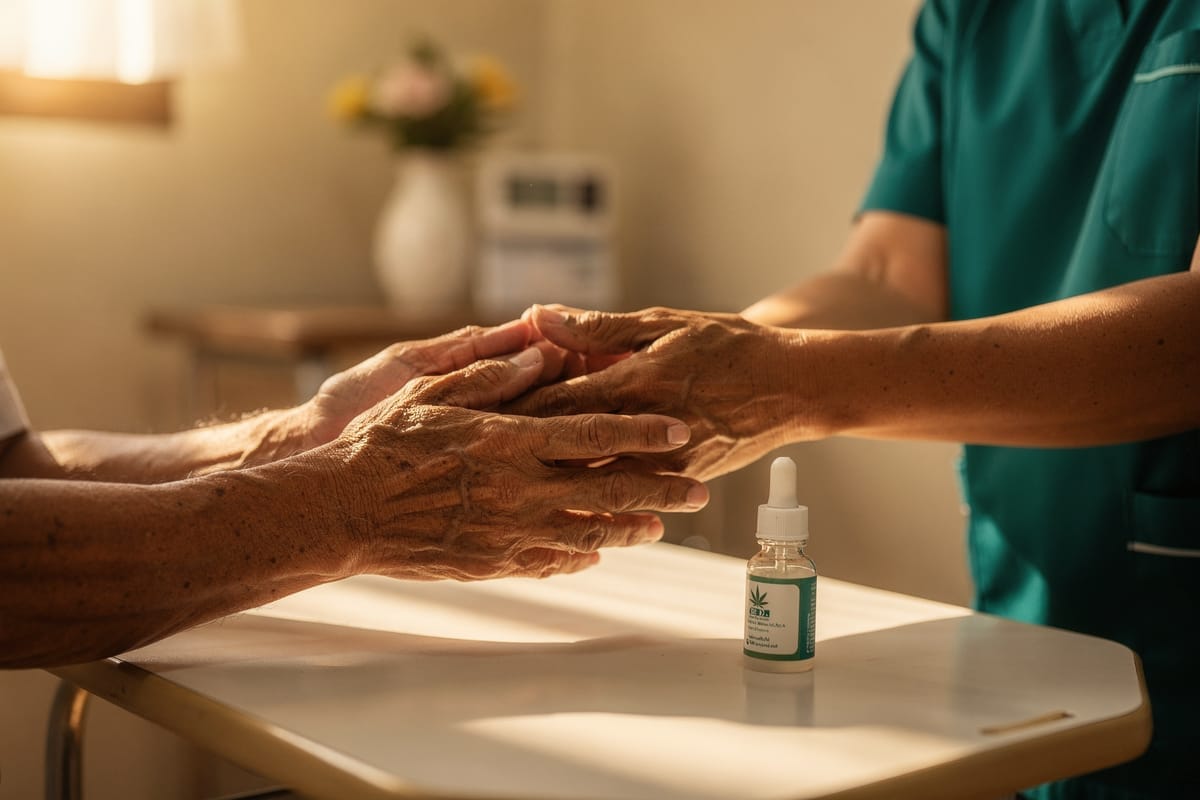
Cannabis for Parkinson’s Disease in Thailand: A Medical Guide
Parkinson’s disease (PD) is a progressive neurological condition that affects movement, balance, and many aspects of daily life. It is one of the five primary conditions recognized under Thailand’s PT 33 medical cannabis prescription system, reflecting growing interest in cannabis as a complementary treatment for managing Parkinson’s symptoms.
This guide covers what current research shows about cannabis and Parkinson’s disease, how to access treatment in Thailand, and important safety considerations that every Parkinson’s patient should understand before starting cannabis therapy.
Important: Parkinson’s disease is a serious neurological condition that requires ongoing management by a qualified neurologist. Cannabis should be considered only as a complementary therapy alongside — never as a replacement for — standard Parkinson’s medications and care.
Understanding Parkinson’s Disease
Parkinson’s disease involves the progressive loss of dopamine-producing neurons in the brain, particularly in an area called the substantia nigra. This dopamine deficiency leads to the characteristic motor symptoms of PD:
- Tremor — involuntary shaking, often starting in the hands
- Rigidity — muscle stiffness throughout the body
- Bradykinesia — slowness of movement
- Postural instability — balance problems and risk of falls
Beyond motor symptoms, Parkinson’s also causes a range of non-motor symptoms that significantly affect quality of life:
- Sleep disturbances and insomnia
- Pain (musculoskeletal, neuropathic, and dystonic)
- Anxiety and depression
- Cognitive changes
- Constipation and digestive issues
- Loss of smell
How Cannabis May Help Parkinson’s Symptoms
The endocannabinoid system (ECS) has a significant presence in the basal ganglia — the brain region most affected by Parkinson’s disease. CB1 receptors are densely concentrated in this area, which is why researchers have investigated whether cannabis compounds might influence PD symptoms.
Motor Symptoms
Tremor: Some patients report that cannabis, particularly CBD-dominant products, may help reduce tremor severity. The mechanism is not fully understood, but may involve CBD’s interaction with dopamine receptors and its anxiolytic effects, since anxiety often worsens tremor.
Rigidity and bradykinesia: THC may help with muscle rigidity through its muscle-relaxant properties. Some patients report improved ease of movement, though the evidence remains preliminary.
Dyskinesia: Levodopa-induced dyskinesia (involuntary movements caused by long-term Parkinson’s medication) is one area where cannabis research has shown particular promise. CBD may help reduce dyskinesia without worsening the underlying Parkinson’s symptoms, though study results have been mixed.
Non-Motor Symptoms
This is where many Parkinson’s patients report the most benefit from cannabis:
Sleep problems: THC-containing products may help with the insomnia and fragmented sleep that are common in PD. Some patients also report improvement in REM sleep behavior disorder, a condition where patients physically act out their dreams.
Pain: Parkinson’s-related pain — including musculoskeletal pain, neuropathic pain, and dystonic pain — may respond to cannabis treatment. Both THC and CBD have analgesic properties through different mechanisms.
Anxiety and depression: CBD has anxiolytic and potentially antidepressant properties. Many PD patients experience significant anxiety, and CBD-dominant products may offer relief without the psychoactive effects of THC.
Nausea: Some Parkinson’s patients experience nausea either from the disease itself or as a side effect of medications. THC has well-established antiemetic properties.
Research Evidence
Thai Clinical Research
Thailand has been actively researching cannabis for Parkinson’s disease. Notable work includes:
Buriram Hospital Trial: A prospective, double-blind, randomized, placebo-controlled trial conducted at Buriram Hospital examined the efficacy of a cannabidiol-enriched cannabis extraction product on disease severity, quality of life, and functional performance in Parkinson’s patients. This trial represents one of Thailand’s contributions to the global evidence base for cannabis and PD.
A subsequent study at the same institution randomized 60 Parkinson’s patients into CBD and placebo groups, examining the effects of sublingual CBD-enriched product on cognitive function and inflammatory markers.
These Thai studies are significant because they use products and protocols relevant to the Thai medical cannabis system, providing locally applicable evidence for practitioners.
International Research
The broader international research picture includes:
- A systematic review and meta-analysis examining the effects of cannabis in Parkinson’s disease found potential benefits for tremor, anxiety, pain, sleep quality, and overall quality of life
- Several observational studies have found that Parkinson’s patients who use cannabis report improvements in non-motor symptoms, particularly sleep, pain, and mood
- Research into the CB2 receptor agonist HU-308 has suggested potential for treating side effects of Parkinson’s disease
However, it is important to note that no compelling evidence currently exists to broadly recommend cannabis as a standard treatment for Parkinson’s disease. The research shows potential benefit, particularly for symptom management, but more rigorous clinical trials are needed.
What We Do Not Yet Know
Research gaps include:
- The long-term effects of cannabis use in Parkinson’s patients
- Optimal cannabinoid ratios and dosing for different PD symptoms
- How cannabis interacts with the progression of Parkinson’s disease over time
- Whether cannabis has any neuroprotective properties relevant to PD (suggested in preclinical studies but unconfirmed in humans)
CBD vs THC for Parkinson’s Symptoms
CBD for Parkinson’s
CBD has received the most research attention for Parkinson’s disease. Potential benefits include:
- Tremor reduction — CBD may reduce tremor through multiple mechanisms
- Anxiety relief — without psychoactive effects that could disorient PD patients
- Potential neuroprotective effects — suggested in laboratory studies, though unconfirmed in humans
- Anti-inflammatory properties — neuroinflammation plays a role in PD progression
- Dyskinesia management — may help reduce levodopa-induced involuntary movements
- No impairment — important for PD patients who already face cognitive and motor challenges
THC for Parkinson’s
THC may help with:
- Sleep problems — the most commonly reported benefit among PD patients
- Pain management — particularly neuropathic and musculoskeletal pain
- Appetite stimulation — weight loss is common in advanced PD
- Muscle relaxation — may ease rigidity
- Nausea relief — from disease or medication side effects
However, THC carries specific risks for Parkinson’s patients:
- Orthostatic hypotension — THC can lower blood pressure, and PD patients are already prone to blood pressure drops upon standing, increasing fall risk
- Cognitive effects — PD patients may already experience cognitive changes, and THC can add to confusion or disorientation
- Balance and coordination — THC impairment combined with PD motor symptoms increases fall risk
- Hallucinations — some PD patients experience visual hallucinations, and THC can worsen this
Recommended Approach
Most practitioners familiar with both PD and cannabis medicine recommend:
- Start with CBD-only products to assess tolerability
- Add small amounts of THC gradually if needed for pain or sleep
- Use the lowest effective dose of THC to minimize side effects
- Monitor closely for any worsening of balance, cognition, or hallucinations
PT 33 Access for Parkinson’s Patients
Parkinson’s disease is one of the five primary qualifying conditions under Thailand’s PT 33 system. For a complete guide to the prescription process, see our PT 33 Prescription Guide.
Consultation Process
- Find a clinic with PD experience — Ideally, choose a clinic where the practitioner has experience treating neurological conditions with cannabis
- Bring your medical records — PD diagnosis, current medications (including all dosages and timing), and any neurologist reports
- List all medications — This is especially important for Parkinson’s patients due to potential drug interactions
- Describe your symptoms in detail — Which symptoms bother you most? Motor symptoms, sleep, pain, anxiety?
- Discuss your goals — Are you seeking help with sleep? Pain? Tremor? This helps the practitioner recommend the right product
- Bring a caregiver — If your PD symptoms make it difficult to communicate or travel alone, bring a family member or caregiver
Important: Coordinate with Your Neurologist
Before starting cannabis, inform your neurologist. Ideally, your neurologist and cannabis practitioner should be aware of each other’s treatment plans. This coordination is essential because:
- Cannabis may affect the timing and effectiveness of levodopa doses
- Dose adjustments to PD medications may be needed
- Monitoring for adverse interactions requires awareness from both practitioners
Drug Interactions with Parkinson’s Medications
This is one of the most important sections for Parkinson’s patients. Cannabis can interact with several PD medications.
Levodopa/Carbidopa (Sinemet, Madopar)
Levodopa is the cornerstone of Parkinson’s treatment. Cannabis interactions to be aware of:
- THC may enhance the blood pressure-lowering effects of levodopa, increasing the risk of orthostatic hypotension (dizziness upon standing)
- Some patients report that cannabis affects the timing of levodopa’s “on” and “off” periods, though this is not well studied
- CBD may inhibit certain liver enzymes (CYP3A4, CYP2C19) that metabolize levodopa, potentially altering drug levels
Dopamine Agonists (pramipexole, ropinirole)
- Cannabis may add to the sedation caused by dopamine agonists
- Both cannabis and dopamine agonists can lower blood pressure
- Monitor for excessive drowsiness, dizziness, or confusion
MAO-B Inhibitors (selegiline, rasagiline)
- Theoretical risk of interactions affecting serotonin and dopamine systems
- Use caution and start with very low cannabis doses
- Report any unusual symptoms to your practitioner
Anticholinergics (trihexyphenidyl, benztropine)
- Both cannabis (particularly THC) and anticholinergics can cause dry mouth, constipation, and cognitive effects
- Combined use may increase these side effects
Amantadine
- Both amantadine and cannabis can cause dizziness and confusion
- Monitor closely when starting cannabis alongside amantadine
Available Products in Thailand
CBD-Dominant Oils
The most commonly recommended starting product for Parkinson’s patients. Government Pharmaceutical Organization (GPO) formulations include a high-CBD oil (100 mg/mL CBD) that is available at government hospitals.
Balanced THC:CBD Oils
For patients who need help with pain and sleep in addition to tremor and anxiety. The GPO balanced formula (27 mg/mL THC and 25 mg/mL CBD) provides both cannabinoids in measured doses.
THC-Dominant Oils
Used cautiously and primarily for evening/nighttime dosing to address sleep and pain. The GPO high-THC formula (13 mg/mL THC) is available but should be used with extra caution in PD patients.
Capsules
Pre-dosed capsules offer consistency, which is important for PD patients who may have difficulty with oil droppers due to tremor or fine motor challenges.
Topical Products
Cannabis-infused balms and creams applied to areas of pain or rigidity. These do not produce systemic psychoactive effects and may be a safe option for localized musculoskeletal pain.
Dosage and Administration
Starting Doses for Parkinson’s Patients
Parkinson’s patients should start with lower doses than the general population due to increased sensitivity to side effects.
CBD-only start (recommended first step):
| Week | Dose | Timing |
|---|---|---|
| Week 1-2 | 5-10 mg CBD | Morning and evening |
| Week 3-4 | 10-20 mg CBD | Morning and evening |
| Week 5+ | Adjust based on response | As directed by practitioner |
Adding THC (if needed, after establishing CBD tolerance):
| Step | Dose | Timing |
|---|---|---|
| Step 1 | 1-2.5 mg THC | Evening only |
| Step 2 | 2.5-5 mg THC | Evening only |
| Step 3 | Adjust based on response | As directed by practitioner |
Administration Tips for PD Patients
- Use dropper aids if tremor makes it difficult to measure oil doses — ask your dispensary about available accessories
- Take cannabis at consistent times relative to your levodopa schedule
- Keep a symptom diary tracking motor symptoms, sleep quality, pain, and any side effects
- Have a caregiver assist with dosing if fine motor control is an issue
- Use sublingual administration (under the tongue) for the most predictable absorption
When Cannabis Is NOT Appropriate
Do not use cannabis for Parkinson’s disease in the following situations:
- Active psychosis or hallucinations — THC can worsen hallucinations that occur in some PD patients. If you experience visual hallucinations, discuss this with your neurologist before considering any cannabis product.
- Severe cognitive impairment or dementia — THC may worsen cognitive function in patients with Parkinson’s disease dementia
- High fall risk — If you are already experiencing frequent falls, THC may increase this risk through dizziness and impaired coordination
- Uncontrolled blood pressure — Both THC and some PD medications lower blood pressure
- Without neurologist awareness — Given the complexity of Parkinson’s medication regimens, never start cannabis without informing your neurologist
Practical Considerations
Cost
Ongoing cannabis treatment for PD should be factored into care costs:
- Consultation: 300-1,500 THB
- GPO cannabis oil: 200-800 THB (often the most affordable)
- Private-label CBD oils: 500-3,000 THB
- PT 33 renewal: Required every 30 days
Government hospitals offer the most affordable access to cannabis products for PD patients.
Support Resources
- Your neurologist remains your primary PD care provider
- Cannabis practitioners can optimize your cannabis regimen
- Parkinson’s support groups in Thailand may have members with cannabis experience
- Caregiver involvement is strongly recommended for dosing and monitoring
Legal Reminders
- A PT 33 prescription is required for THC-containing products
- CBD products under 0.2% THC are available without a prescription
- Do not drive after using THC-containing products
- Cannabis cannot be taken out of Thailand — see the full legal framework for details
- Keep your PT 33 with you when carrying cannabis products
Medical Disclaimer
This article is for informational purposes only and does not constitute medical advice. Parkinson’s disease is a serious, progressive neurological condition that requires management by a qualified neurologist.
Cannabis should be considered only as a complementary therapy alongside standard Parkinson’s treatment — never as a replacement. The research on cannabis for Parkinson’s disease is still evolving, and many claims about its benefits remain preliminary.
Never adjust your Parkinson’s medications based on information in this article. Always consult with your neurologist and a licensed cannabis practitioner before starting, stopping, or changing any treatment.
If you experience sudden worsening of symptoms, new hallucinations, significant changes in balance, or any other concerning changes, seek medical attention immediately.
More on medical cannabis in Thailand: start with the pillar guide to medical cannabis in Thailand for the legal status, costs and access routes, and the PT 33 prescription guide for the form itself.
Frequently Asked Questions
Does cannabis help Parkinson's disease?
Can Parkinson's patients get cannabis in Thailand?
What type of cannabis is best for Parkinson's?
Is it safe to use cannabis with Parkinson's medication?
Cannabis for Thailand Editorial Team
Cannabis for Thailand